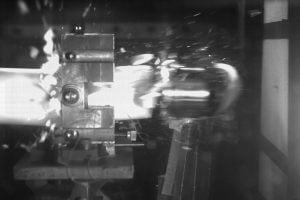
Did life on Earth hitch a ride from somewhere else? In March 3’s New York Times, writer Robin George Andrews highlights new research from K.T. Ramesh, Alonzo G. Decker Jr. Professor of Science and Engineering, examining whether microbes could survive the extreme pressures generated by asteroid impacts. The findings suggest it may be possible for hardy microorganisms to endure the violent forces required to travel between planets — lending experimental support to the long-debated theory of lithopanspermia.
The research, “Extremophile survives the transient pressures associated with impact-induced ejection from Mars,” was published in PNAS Nexus.
Read the full Times article to learn more about the study and its implications for the origins of life.