
Younan Xia, Bloomberg Distinguished Professor of Nanoscience and Nanotechnology and a member of the 2026 class of the National Academy of Engineering, is an internationally recognized leader in nanomaterials research, with joint appointments in the departments of Materials Science and Engineering and Biomedical Engineering at Johns Hopkins University.
At Johns Hopkins, he is committed to advancing interdisciplinary research, mentoring students and postdoctoral fellows, and fostering collaborations that address complex scientific and societal challenges. His work spans chemistry, materials science, and bioengineering, with a focus on the design and synthesis of nanostructured materials and their applications in biomedicine, energy, and catalysis.
His research group is widely known for pioneering contributions to the controlled synthesis of nanomaterials, including shape-controlled nanocrystals and nanoscale fabrication techniques. These advances have enabled new approaches in nanomedicine, regenerative engineering, photonics, and heterogeneous catalysis. Professor Xia’s work emphasizes a fundamental understanding of structure–property relationships while also pursuing translational applications with clinical and technological relevance.
Professor Xia is a highly cited scholar and the recipient of numerous national and international honors recognizing his contributions to chemistry, materials science, and engineering.
He previously held faculty appointments at the University of Washington, Washington University in St. Louis, and the Georgia Institute of Technology, where he served as the Brock Family Chair and a Georgia Research Alliance Eminent Scholar in Nanomedicine.
Professor Xia received his BS in chemical physics from the University of Science and Technology of China, his MS in inorganic chemistry from the University of Pennsylvania, and his PhD in physical chemistry from Harvard University, where he conducted research under the mentorship of George M. Whitesides.
-


Bloomberg Distinguished Professor cited "for research and leadership in the invention and rational development of advanced materials for nanomedicine and regenerative medicine."
-
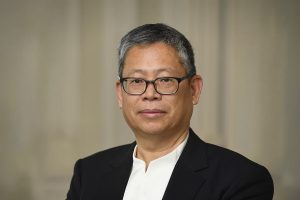
Younan Xia Joins Hopkins as Bloomberg Distinguished Professor of Nanoscience and Nanotechnology
CategoriesThe translation into practical applications is a key part of Xia's work, which bridges the gap between laboratory research and real-world solutions, creating nanomaterials that benefit society.