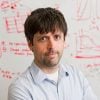
Mark A. Kramer will join the Whiting School of Engineering’s Department of Applied Mathematics and Statistics as a professor in July 2026. His work bridges mathematical modeling, statistics, and machine learning with systems neuroscience. He comes to Johns Hopkins from Boston University, where he was a professor of mathematics and statistics and served as associate director of the Center for Systems Neuroscience. His research group collaborates within interdisciplinary teams of clinicians, neuroscientist, and engineers supported by his joint appointment in the School of Medicine’s Department of Neurology. Through these interdisciplinary collaborations, he works to develop quantitative methods that characterize brain rhythms and neural circuits in health and disease, with a particular focus on epilepsy, sleep, and memory.
Kramer’s research investigates the links between neural dynamics and cognition by integrating theory with invasive and noninvasive human brain voltage recordings. Recent studies include evidence that thalamic epileptic spikes disrupt sleep spindle production, offering a mechanistic account for cognitive impairment in epileptic encephalopathies (Brain, 2024); a general, noise-driven explanation for the ubiquitous 1/f-like structure of neural field spectra (Neural Computation, 2024); identification of multiple sources of fast-traveling waves in the human cortex (Journal of Neuroscience, 2022); and work showing that focal sleep spindle deficits predict cognitive dysfunction in childhood epilepsy (Journal of Neuroscience, 2021).
Kramer’s translational research leverages statistical and machine-learning approaches to detect clinically meaningful brain rhythms. Applications include deep neural networks to classify spectrogram images to detect pathological rhythms associated with epilepsy (Journal of Neuroscience Methods, 2021; Neuroscience Research, 2025). Applying these methods to data from a multicenter international intracranial EEG study showed that these pathological events more reliably localize epileptogenic tissue—and are more often removed in seizure-free outcomes—than other leading interictal biomarkers (Brain, 2024). Alternatively, feature-based approaches can be used to estimate latent rhythms in noisy brain data to track thalamocortical dysfunction (Brain, 2024) and predict cognitive performance in children with sleep-activated epilepsy (Brain, 2021). Recent collaborative work examines how stimulation-induced changes impact brain rhythms and correlate with memory consolidation (bioRxiv, 2025).
Kramer is coauthor (with Uri T. Eden) of the textbook Case Studies in Neural Data Analysis: A Guide for the Practicing Neuroscientist (MIT Press), as well as a free, open Python companion. His teaching focuses on modeling and data analysis in neuroscience, and he actively mentors students and trainees at the interface of applied mathematics, statistics, and neuroscience.
Before joining Johns Hopkins, Kramer was an Institute Junior Faculty Fellow at BU’s Rafik Hariri Institute for Computing and Computational Science & Engineering. His honors include the National Science Foundation CAREER Award and the Burroughs Wellcome Fund Career Award at the Scientific Interface, supporting his early work on neural dynamics and epilepsy.
Kramer received his PhD in applied physics from the University of California, Berkeley; he completed postdoctoral training in dynamical systems and neuroscience at Boston University with Nancy Kopell.