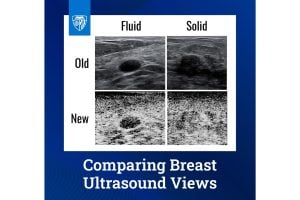
New ultrasound technology developed at Johns Hopkins can distinguish fluid from solid breast masses with near perfect accuracy, an advance that could save patients, especially those with dense breast tissue, from unnecessary follow-up exams, painful procedures, and anxiety.
In initial tests with real patients, doctors working with the new method accurately identified masses 96% of the time—they were right just 67% of the time analyzing the same masses with their regular tools.
“This is important because the benefits of ultrasound in breast cancer detection can be limited by the similar appearance of benign fluid masses and solid masses, which can be cancerous,” said senior author Muyinatu “Bisi” Bell, a Johns Hopkins biomedical and electrical engineer who specializes in imaging technology. “Our achievement will change the landscape of how breast cancer is diagnosed. Radiologists can be immediately confident in diagnoses. And patients won’t be sent for biopsies and invasive procedures when there is more confidence that a mass is nothing to be concerned about.”
The federally funded work is published today in Radiology Advances.
It’s recommended every woman over 40 gets a mammogram to detect breast cancer early. But the results can be inconclusive for women with dense breast tissue. Those women are often sent next to get ultrasounds—technology that also has trouble with dense breast tissue.