Recent News
-

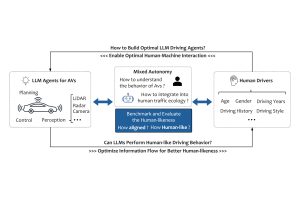
Can AI agents drive better than humans? Hopkins engineers put large language models behind the wheel
CategoriesEngineers find that LLMs can partially mimic human driving and decision-making behavior and align most closely with younger, more aggressive drivers
-

As taller mass timber buildings become more common, researchers investigate their structural response to fires to develop safer building designs and fire resistance specifications
-

Johns Hopkins-led effort offers powerful new tool to aid health policy by integrating personal decision-making into disease prediction model
-

The framework improves accuracy of detection while running faster on embedded hardware
-

SafeTraffic Copilot, created by Johns Hopkins team, aims to provide experts with crash analyses and predictions to reduce the rising number of fatalities and injuries that happen on U.S. roads each year
-

Johns Hopkins engineers prove custom fire designs outperform standard codes on multiple measures
-

The new tool is the first to use large language modeling to predict infectious disease risk
-

Engineers from Johns Hopkins and UC San Diego are leading a study to test the limits of cold-formed steel to improve disaster resilience and recovery
-
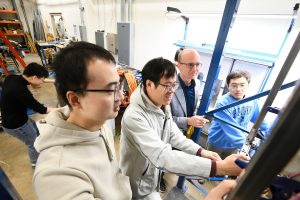
A computational tool developed by Johns Hopkins civil engineer Thomas Gernay predicts how fire affects structures, leading to more resilient designs and enhanced public safety
-
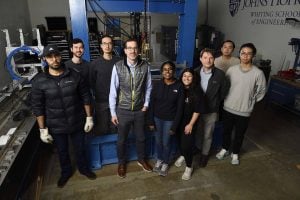
Support from the National Science Foundation helps civil engineers like Ben Schafer improve building codes and develop more resilient, cost-effective building materials
-
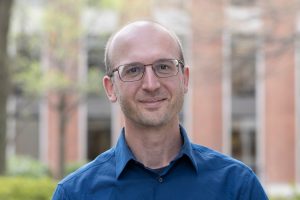
Fire-resistant designs, community collaboration could be the best defense against future wildfires
CategoriesJohns Hopkins structural design and resilience expert Thomas Gernay says fire-resistant building designs are key to protecting communities from increasingly destructive wildfires
-
The award supports the improvement of humanitarian responses through AI and data science