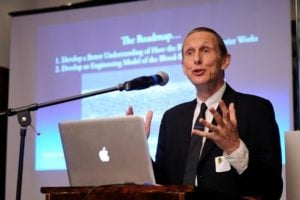
Peter Searson, the Joseph R. and Lynn C. Reynolds Professor of Materials Science and Engineering, and core researcher in the Institute for NanoBioTechnology, is engaged in unravelling the complex mechanisms by which Alzheimer’s disease and other diseases of the brain disrupt the blood-brain barrier.
Searson’s lab is primarily funded by the National Institutes of Health, and in response to a new NIH initiative emphasizing human models that was started in the spring of 2025, his lab is developing tissue-engineered models to study the physiological and pathological responses to chemical, physical, and biological changes associated with neurodegenerative diseases, stroke, aging, and infectious diseases.
By using stem-cell technology, Searson’s lab is incorporating human cells into replicas of the small blood vessels in the human brain that form the blood-brain barrier, the complex interface that allows or blocks the passage of substances into the brain.
“The blood-brain barrier is a security system that enables the brain to function in a tightly controlled biochemical environment,” Searson says. “By selectively transporting nutrients and other key molecules into the brain, the blood-brain barrier protects the brain, preventing entry of toxins, pathogens, and other molecules that could disrupt normal signaling. This specialized barrier is essential for overall brain health.”
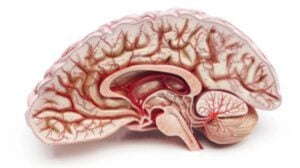
3D Digital of the Detailed Cross-section of the Blood-Brain Barrier,Used in Medical Research and Disease Treatment.
Since blood-brain barrier function is critical for normal brain function, disruption can have a profound effect on brain health. During life, the blood-brain barrier is subjected to perturbations and stressors from a wide range of sources, which can promote brain health or can lead to brain pathologies. Examples of stressors include hypertension, poor blood flow, inflammation, and depression.
In mild cases of disruption, molecules from blood in circulation can leak into the brain. This could be reversible and may be localized to specific regions of the brain, but in more severe cases, both molecules and cells in blood can enter the brain, resulting in microbleeds and hemorrhage.
Disruption of the blood-brain barrier is increasingly recognized as a major contributor to a wide range of seemingly unrelated diseases, including Alzheimer’s disease, obesity, chronic pain, traumatic brain injury, and multiple sclerosis. Since the blood-brain barrier regulates a variety of processes, there are many mechanisms of disruption that can affect the brain in different ways. Furthermore, the ability of the blood-brain barrier to repair itself is dependent on the mechanism and magnitude of dysfunction.
“In many diseases of the brain, there are multiple risk factors that can drive different mechanisms of dysfunction. That’s one of the things we’re trying to untangle. How does a specific risk factor affect the blood-brain barrier?” Searson says.
To disentangle how the blood-brain barrier becomes disrupted and how to fix it, Searson’s lab is using its models to study blood-brain barrier injury and healing and how this is relevant to human disease. They can also genetically engineer the cells to harbor mutations associated with brain diseases, allowing them to study treatments.
“By observing these microvessels on a microscopic level, we can see how they can mimic responses in the human brain. By replicating the effects of stressors such as inflammation or vessel narrowing, we are deconvoluting how stress causes blood-brain barrier disruption,” Searson says.
Normal aging also results in low levels of blood-brain barrier disruption. Searson and his lab are studying how age-related changes in the concentration of blood proteins affect the blood-brain barrier. This work could lead to targeted therapies to slow vascular aging and prevent age-related neurodegenerative diseases.
“Because the blood-brain barrier is so effective, apart from a few very small molecules, it’s almost impossible to get drugs into the brain,” Searson says. “A major challenge in treating diseases of the brain is getting drugs across the blood-brain barrier.”
Searson participated in the Adult Brain Tumor Consortium’s Workshop to help identify better strategies to assess the ability of candidate drugs to cross the blood-brain barrier. The models developed in the Searson Lab were being used by the consortium to test strategies for delivering drugs or genes to the brain via the blood-brain barrier.
Like many research efforts across the country, Searson’s work faces growing uncertainty around future funding. As federal budgets tighten and priorities shift, maintaining support for long-term, foundational research, especially studies that rely on technologies like these human-based models, have become more precarious. Searson and those in his lab hope they can continue the life-saving work that is advancing the ability to deliver drugs across the blood-brain barrier to help people live longer and healthier lives.