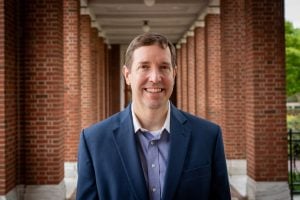
A team led by MatSci Department Head Michael Kessler is planning to convene the University Materials Council to discuss the future of materials science research and education.
The University Materials Council is made up of roughly 150 department heads, chairs, directors, and leaders in materials science from universities across the US, Canada, and Australia. Kessler also serves as the chair-elect of the council.
The name of the proposed event is “Shaping the Future of Materials Science and Engineering: A
National Convening of the University Materials Council.” It will be held at the Johns Hopkins University Bloomberg Center in Washington, D.C., and it was announced today that the endeavor would receive a Nexus Award from the university.
“The Nexus Awards exemplify Johns Hopkins at its best – bringing together researchers across disciplines to tackle complex challenges with rigor, creativity, and a deep commitment to public impact,” interim provost Lainie Rutkow said in a press release. “At the Hopkins Bloomberg Center, these projects help connect groundbreaking research with the policy conversations and real-world needs shaping our future in Washington and beyond.”
The award provides up to $100,000 over the course of a year to plan and execute the project. The convening is scheduled for the spring of 2027.
“As Chair-Elect of the University Materials Council, I am excited to use this award to bring together national leaders in the materials science and engineering community to shape a collective vision for the field’s future, and I am proud that Johns Hopkins will serve as the convening ground for that national conversation,” said Kessler.
Twenty-seven other convening, research, and teaching projects based at the Johns Hopkins University Bloomberg Center were chosen to receive the award. The projects span every academic division of the university and include more than 100 scholars studying things like AI in transportation, rare disease therapies, research in art history, and public-private-university partnerships for American space leadership.
“In the nearly three years since we opened the doors to our Hopkins Bloomberg Center, our 118 Nexus awardees have been instrumental to realizing its founding aspirations as a hub for interdisciplinary convenings, groundbreaking cross-divisional research, and exemplary teaching,” said Ron Daniels, president of Johns Hopkins University.
“In Hopkins’ 150th year, we are thrilled to support a fourth class of Nexus Award winners, who continue to fulfill the promise of this building by inspiring discovery and making a public and meaningful impact on the urgent issues of our time.”
Kessler said the main thrust of the conference will be to bring together department leaders across academia, leaders at federal agencies, industry and the policy community to hammer out a shared vision of materials science research and education going into the future and how to work together towards that goal.
Other 2026 Nexus Award recipients include:
Convening
- Advancing a National Network for Safe, Healthy, and Equitable Schools: Odis Johnson (SOE), Annette Campbell Anderson (SOE), Panagis Galiatsatos (SOM), Catherine Ling (SON), Tamar Mendelson (BSPH), Elise Pas (BSPH)
- American Roots Festival: Andrew Kipe (Peabody), Michael Christie (Peabody), Sean Jones (Peabody), Joseph Young (Peabody)
- ASCENT 2027: Adopting Smell Screening for Cognition and Early Neurocognitive Testing: Nicholas Rowan (SOM), Andrew Lane (SOM), Leila Mady (SOM), Daniel Polsky (BSPH)
- Building a Sustainable Road Map for Engaged Research in Art History: Jennifer Kingsley (KSAS)
- Catalyst: Stimulating Undergraduate Research at the Science-Policy Interface: David Wilson (SOM), Jessica Dunleavey (WSE)
- Clinical, Ethical, Economic, and Public Health Dimensions of Psychedelic Policy: Mario Macis (Carey), Frederick Barrett (SOM), Michael Darden (Carey), Matthew Eisenberg (BSPH), Jeffrey Kahn (Berman), Daniel Polsky (BSPH), David Yaden (SOM)
- Convening Series on Government Reform: William Howell (SGP)
- Developing Ethics Guidance to Support Pregnant Women’s Access to Non-Pharmacological Pain Management in Research and Practice: Stephanie Moran (Berman), Ruth Faden (Berman), Jeanne Sheffield (SOM)
- Distinguishing Causation from Correlation: Training for Journalists: Elizabeth Stuart (BSPH), Joanne Kenen (BSPH)
- Fostering Collaborative Pathways: Bridging Indigenous Health and Nursing to Address Health Disparities through Policy Advocacy: Teresa Brockie (SON), Allison Barlow (BSPH)
- From Validation to Vigilance: Convening Framework for Lifecycle Evaluation of Medical AI: David Rastall (SOM), Ayse Gurses (SOM), Ahmed Hassoon (BSPH), Kathy McDonald (SON), Peter Najjar (SOM), David Newman-Toker (SOM), Michael Rosen (SOM), Laura Sigman (SOM)
- Health Policy Implications of the 2026 Mid-Term Elections: Daniel Polsky (BSPH), Melinda Buntin (BSPH)
- “Hopkins in Space”: Public-Private-University Partnership for American Space Leadership: Carla Freeman (SAIS), Svetla Ben-Itzhak (SAIS), Bobby Braun (APL), William Egginton (KSAS), Toby Gordon (CBS), Stephan McCandliss (KSAS), James Miller (APL), Mark Shelhamer (SOM), Gretar Tryggvason (WSE)
- Innovative Internships for a Thriving Democracy: Amy Binder (KSAS)
- International Planetary Probe Workshop 2026: Kenneth Hibbard (APL), Samuel Albert (APL), Steven Arnold (APL), Sarah Hörst (KSAS), Ralph Lorenz (APL)
- Medicine, Technology, and Environment: An International Summer School between Johns Hopkins University and the Oswaldo Cruz Foundation*: Nicole Labruto (KSAS), Jeremy Greene (SOM), Graham Mooney (SOM), Alexandre White (KSAS)
- Returning to Balance: Youth-Led, Strengths-Based Indigenous Arts Pathways to Health and Intergenerational Healing: Faye McMillian (BSPH), Kristen Speakman (BSPH), Melissa Walls (BSPH)
- The Economics of Generative AI: Jessie Liu (Carey), Itay Fainmesser (Carey)
- The Interaction Point: US LHC & Future Collider Horizons: Andrei Gritsan (KSAS), Petra Maksimovic (KSAS), Morris Swartz (KSAS)
- The Past, Present, and Future of U.S. Humanitarian Assistance: Julia Cummiskey (SOM), Yulia Frumer (KSAS), Jeremy Greene (SOM), Dean Moyar (KSAS), Alexandra Phelan (BSPH)
- The Price of Hope: Ethics, Economics, and Policy for Rare Disease Therapy: Jeffrey Kahn (Berman), Tom Crawford (SOM), Mario Macis (Carey), Anna Mastroianni (Berman), Daniel Polsky (BSPH)
Research
- Bridging Community and Biology: Understanding how the Black African Immigrant Experience Shapes Breast Cancer Risk through Education and Epigenetic Investigation: Brittany Jenkins-Lord (BSPH), Avonne Connor (BSPH)
- Protection of Healthcare Systems During Conflict: Investigating Evolving Global Norms and the Impacts of Attacks on Healthcare Workers and the Communities they Serve: Yusra Shawar (BSPH), Majd AlGhatrif (SOM), Joseph Amon (BSPH), Shatha Elnakib (BSPH), Jeremy Shiffman (BSPH), Paul Spiegel (BSPH)
- Quantifying the Societal Benefits of AI in Transportation: Johnathon Ehsani (BSPH), Michelle Duren (BSPH), Jeffrey Michael (BSPH)
Teaching
- Applied Storytelling and Journalism Practicum: Shari Ross Altarac (KSAS), Mladen Petkov (KSAS)
- An Introduction to Planetary Health: Hunter Gehlbach (SOE), Megan Weil Latshaw (BSPH)
- Human-AI Fusion: Building Human-Centered AI Practice in the Nation’s Capital: Wei Wang (Carey)
- The Silicon Patient: Engineering AI-Driven Digital Twins for the Future of Health Policy: Javad Abed (Carey), Anton Dahbura (WSE), Ala Elhelali (SOM)
∗ – denotes projects receiving additional support from the Johns Hopkins Institute for Planetary Health