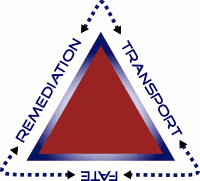
Center for Contaminant Transport, Fate, and Remediation

Center Mission

I. Overall Objectives

The primary objective of this proposed Center (termed TFR Center) is to address concerns associated with a broad range of contaminants (e.g., metals and organics) in different environmental media (e.g., water, soil, sediment, and air). The mission of the TFR Center is two-fold: (1) to promote a better understanding of physical, chemical, and biological processes in order to detect, assess, and manage risks associated with the use and disposal of toxic chemicals in urban environments; and (2) to disseminate the results of the research to various stakeholders including industry, State and local officials, community groups, the EPA and other federal agencies.

A major goal of the TFR Center is to provide scientific understanding on contaminant behavior that contributes to environmental management decisions. The scientific knowledge developed by the TFR Center will aid in determining ways to prevent exposure to contaminants and/or control pertinent contamination. The information gained from the TFR Center¿s activities will provide technical expertise for all stakeholders (including regulators and potentially impacted communities).

The interdisciplinary and multimedia nature of environmental problem-solving demands a diverse array of engineering and scientific talent and facilities. The TFR Center will facilitate collaborative efforts and integration of knowledge that cannot be achieved by investigators working on their own. The proposed TFR Center will employ a multimedia and multidisciplinary approach to risk assessment and risk management issues pertinent to environmental problems.

II. Rationale

The Northeast has a long history of heavy industrial development in steel production, agrochemical production and manufacturing, specialty chemical production, petroleum refining, shipbuilding, and transportation. An unfortunate consequence of this industrialization is the presence of industrial waste and pollution at dump sites, abandoned facilities, in sediments, and in surface and ground waters, and the release of toxic compounds from ongoing activities. Urban residents are concerned over exposure to toxic chemicals from Superfund sites, landfills, incinerators, leaded paint, Brownfields, industrial contamination, contaminated sediments, and pesticide use. Through a combination of laboratory- and field-scale research, the TFR Center will address contaminants and sources that are known to be prevalent in urban environments. The TFR Center will initially focus its efforts on major contamination issues in the Baltimore region. Because the TFR Center involves a multimedia and multidisciplinary approach, the information generated from studies in Baltimore is likely easily extended to other areas of the U.S.

Throughout the Baltimore region, numerous contaminants are of concern. Example contaminants include chlorinated solvents, petroleum hydrocarbons, polycyclic aromatic hydrocarbons, PCBs, pesticides, and heavy metals. These contaminants are associated with Superfund sites, landfills, RCRA sites, surface waters, groundwaters, Brownfields, and harbor sediments. The presence of Cr in waters, soils, and sediments is one of the major issues in the Baltimore region. Consequently, this proposed TFR Center will focus initially on pertinent research issues related to Cr behavior in aquatic systems.